Jacketed Mixing Tank: Working Principle, Applications, Components, and Selection Guide
A jacketed mixing tank combines mechanical mixing with indirect heating or cooling, making it useful for a wide range of industrial manufacturing processes. Its effectiveness depends on selecting the appropriate vessel capacity, material of construction, jacket configuration, agitator, and temperature-control arrangement.
Understanding the working principle, components, applications, and selection criteria helps engineers and process operators identify a suitable design for their specific requirements. Proper engineering calculations, material compatibility checks, and consideration of operating conditions are essential for safe, efficient, and repeatable processing.
What Is a Jacketed Mixing Tank?
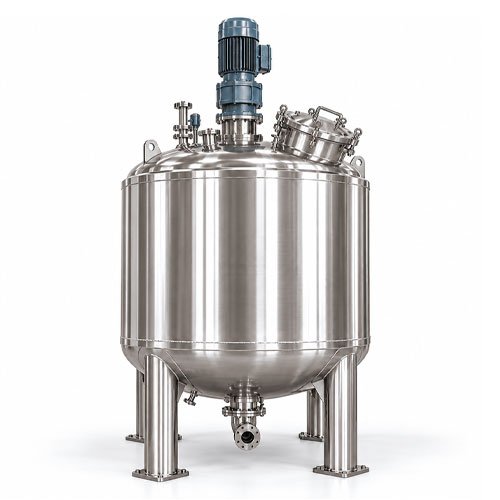
A jacketed mixing tank is an industrial vessel designed to mix materials while controlling their temperature. It consists of a main tank surrounded by an additional chamber called a jacket. A heating or cooling medium circulates through this jacket to transfer heat to or from the product inside the tank.
Jacketed mixing tanks are commonly used in manufacturing processes where temperature affects product quality, viscosity, solubility, chemical reactions, or mixing efficiency. The tank may be equipped with an agitator to ensure uniform blending and improve heat distribution throughout the product.
The heating or cooling medium does not normally mix directly with the product. Instead, heat is transferred through the tank wall. Depending on the application, the jacket may use steam, hot water, thermal oil, chilled water, or another suitable heat-transfer medium.
Working principle of a jacketed mixing tank:
- Raw materials are charged into the main vessel.
- The agitator rotates to blend the ingredients and circulate the product.
- A heating or cooling medium flows through the jacket.
- Heat passes through the tank wall, increasing or decreasing the product temperature.
- Temperature and mixing speed are monitored and adjusted according to process requirements.
- The processed material is discharged after the required mixing and temperature conditions are achieved.
The efficiency of the process depends on factors such as jacket design, heat-transfer area, agitator type, product viscosity, temperature difference, and processing time.
Applications of Jacketed Mixing Tanks
Jacketed mixing tanks are used in industries that require simultaneous mixing and temperature control. Their design can be adapted to different products, production volumes, and operating conditions.
Food and Beverage Industry
In food processing, temperature control is important for dissolving ingredients, preparing mixtures, and maintaining consistent product quality. Jacketed mixing tanks are used for:
- Sauces, gravies, and liquid food preparations
- Syrups, concentrates, and sugar solutions
- Dairy beverages and milk-based products
- Chocolate, confectionery mixtures, and edible pastes
- Soups, dressings, and other processed food products
Pharmaceutical Industry
Pharmaceutical manufacturing often requires controlled processing conditions and suitable hygienic construction. Jacketed tanks can be used for:
- Pharmaceutical syrups and liquid formulations
- Ointments, creams, and gels
- Preparation of solutions and suspensions
- Heating and cooling during formulation
- Temperature-sensitive batch processing
The vessel material, surface finish, cleaning arrangement, and process controls should be selected according to applicable product and hygiene requirements.
Chemical Industry
Chemical processes may require controlled temperatures to improve dissolution, blending, or reaction performance. Typical applications include:
- Chemical solutions and liquid blends
- Specialty chemical formulations
- Polymer and resin processing, where suitable
- Temperature-controlled mixing operations
- Preparation of industrial cleaning chemicals
For reactive or corrosive materials, the vessel and jacket materials must be compatible with the process conditions.
Cosmetics and Personal Care Industry
Many cosmetic formulations require heating to melt ingredients and cooling to achieve the desired consistency. Applications include:
- Skin creams and lotions
- Shampoos and conditioners
- Liquid soaps and gels
- Hair-care formulations
- Emulsions containing oils and water
Detergent and Home Care Industry
Jacketed mixing tanks are also used in the production of liquid detergents and household cleaning products. They can assist with dissolving raw materials, blending ingredients, and maintaining suitable processing temperatures.
Other applications include dairy processing, biotechnology, specialty formulations, and industrial liquid manufacturing.
Main Components of a Jacketed Mixing Tank
A jacketed mixing tank consists of several mechanical, thermal, and control components. Each component contributes to the overall performance and reliability of the system.
Main Tank Vessel
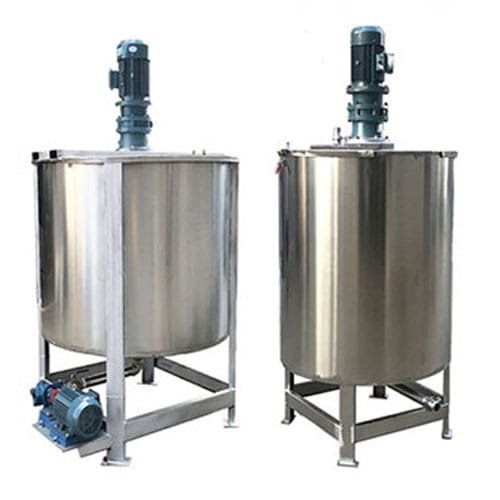
The main vessel holds the material being processed. It may be cylindrical, conical, or designed with another suitable geometry depending on the product and discharge requirements.
Common materials include SS304, SS316, and SS316L stainless steel. The material is selected based on corrosion resistance, hygiene requirements, product compatibility, and operating temperature.
Heating or Cooling Jacket
The jacket is an additional chamber surrounding part or all of the tank. A heat-transfer medium circulates through it to heat or cool the product indirectly.
Common jacket arrangements include:
- Conventional or dimple jackets
- Half-pipe coil jackets
- Other engineered jacket configurations
The appropriate design depends on the required heat-transfer rate, pressure, temperature, fabrication method, and available utilities.
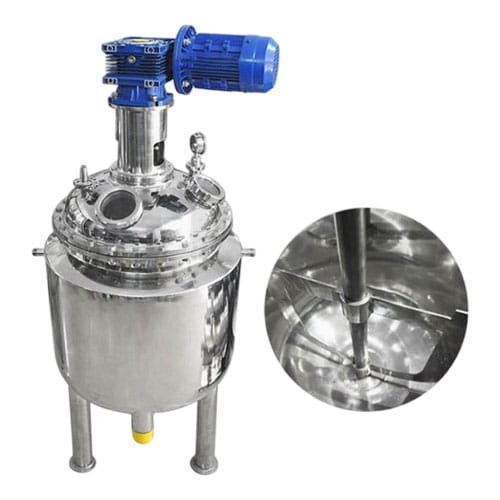
Agitator or Mixing Assembly
The agitator mixes the contents of the vessel and helps distribute heat throughout the batch. Different impeller designs are suitable for different viscosities and flow patterns.
- Propeller: Generally suitable for low-viscosity liquids and circulation.
- Paddle: Used for relatively simple blending applications.
- Pitched-blade turbine: Provides combined axial and radial flow for many liquid-mixing duties.
- Anchor agitator: Often suitable for viscous products and gentle mixing near the tank wall.
- Scraper agitator: Uses blades that move along the vessel wall to reduce product buildup and improve heat transfer in suitable applications.
Agitator selection depends on viscosity, batch volume, required mixing intensity, and product characteristics.
Motor and Gearbox
The motor supplies mechanical power to the agitator. A gearbox may reduce rotational speed and increase torque where required.
Motor power and gearbox specifications depend on product viscosity, agitator geometry, batch size, operating speed, and starting conditions.
Temperature Control System
Temperature control equipment may include sensors, temperature controllers, control valves, and associated instrumentation. These components help maintain the required product temperature.
For more advanced systems, automated controls can regulate the heating or cooling medium according to the measured temperature.
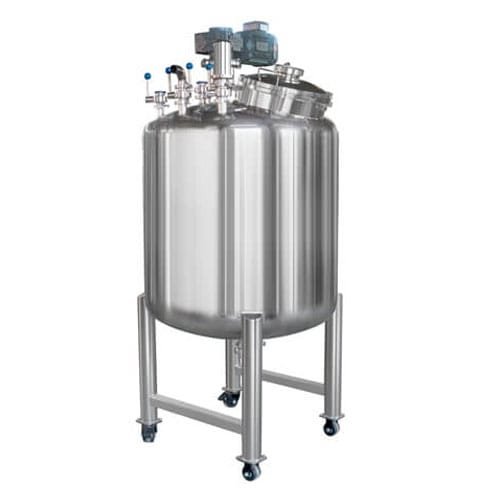
Tank Cover and Connections
The cover provides access for charging, inspection, and cleaning. Process connections may include material inlets, vents, sampling points, temperature-sensor ports, and cleaning connections.
The bottom outlet allows the processed product to be discharged. Its position and size should support the required flow and drainage.
Insulation and Outer Cladding
Insulation reduces unwanted heat loss or heat gain and can improve energy efficiency. An outer cladding layer may protect the insulation and provide a clean external finish.
Key Features of Jacketed Mixing Tanks
The performance of a jacketed mixing tank depends on its mechanical design, thermal arrangement, and control system.
- Temperature control: Supports heating, cooling, or maintaining a specified product temperature.
- Indirect heat transfer: Transfers heat through the vessel wall without normally bringing the heating or cooling medium into direct contact with the product.
- Uniform mixing: A suitable agitator helps maintain product consistency and reduces concentration or temperature differences.
- Flexible jacket configurations: Different jacket designs can be selected to suit the process and heat-transfer requirements.
- Material compatibility: Stainless steel and other suitable materials can be selected according to the product and cleaning conditions.
- Variable-speed mixing: A variable-frequency drive can provide adjustable agitator speed when required.
- Insulation options: Helps reduce heat loss and improve operator protection.
- Customizable vessel geometry: Tank dimensions and bottom configurations can be selected to suit working volume, mixing, and discharge needs.
- Cleaning arrangements: Suitable access, drainability, and cleaning systems can support effective maintenance and sanitation.
- Process automation: Temperature monitoring and automated controls can improve process repeatability.
A jacketed mixing tank does not automatically guarantee uniform temperature or complete mixing. These results depend on the design, product properties, heat-transfer conditions, and operating procedure.
Selection Guide for a Jacketed Mixing Tank
Selecting a jacketed mixing tank requires an understanding of the product, production process, operating temperature, and required mixing performance.
Tank Capacity
The total tank volume and working volume are different. Working volume is the amount of material the vessel is intended to process under normal conditions.
Adequate headspace should be provided for agitation, foam formation, thermal expansion, and safe operation. The required capacity depends on batch size and the nature of the product.
Material of Construction
The material must withstand the product, cleaning chemicals, operating temperature, and other relevant conditions.
- SS304 is commonly used for many general-purpose applications.
- SS316 or SS316L may be preferred where improved corrosion resistance or specific hygienic requirements are necessary.
- Other materials may be appropriate for specialized chemical applications.
The correct selection should be based on actual chemical compatibility rather than material grade alone.
Operating Temperature
Determine the minimum and maximum product temperatures, the required heating or cooling time, and the acceptable temperature variation.
The design temperature of the tank and jacket must be appropriate for the selected heat-transfer medium and operating conditions.
Heating or Cooling Medium
The medium depends on the required temperature range, available utilities, and process conditions.
- Steam may be suitable for rapid heating in properly designed systems.
- Hot water can provide moderate-temperature heating.
- Thermal oil may be used for applications requiring higher temperatures within the system’s design limits.
- Chilled water or another cooling fluid may be used for cooling.
Utility availability, pressure, safety, and operating costs should be evaluated before selecting the system.
Agitator Type and Motor Power
The agitator must match the product’s viscosity and the required flow pattern. Low-viscosity liquids often require a different arrangement from thick creams, pastes, or high-viscosity liquids.
Motor power should be determined from the mixing duty, viscosity, agitator dimensions, speed, and torque requirements rather than tank capacity alone.
Heating and Cooling Performance
The jacket should provide enough heat-transfer capacity to achieve the target temperature within the required time.
Important factors include:
- Product mass and specific heat
- Initial and final product temperatures
- Heat-transfer area
- Temperature difference between the product and jacket medium
- Product viscosity and circulation
- Heat losses to the surroundings
A thermal calculation is recommended for processes with strict temperature or cycle-time requirements.
Cleaning and Maintenance
The design should allow suitable access for inspection and cleaning. Food, pharmaceutical, and cosmetic applications may require hygienic surface finishes, drainable connections, and clean-in-place arrangements.
Pressure and Vacuum Requirements
A standard atmospheric mixing tank should not be assumed suitable for pressurized or vacuum operation. If pressure or vacuum is required, the vessel, jacket, nozzles, closures, and safety devices must be designed for the specified conditions.
Customization Options
Jacketed mixing tanks can be customized to suit specific manufacturing processes. The required configuration depends on the product characteristics, plant layout, operating conditions, and level of automation.
Capacity and Vessel Design
- Different total and working capacities
- Customized diameter, shell height, and overall dimensions
- Cylindrical, conical, or other suitable vessel geometries
- Dished, conical, or flat-bottom arrangements
- Open-top or closed-vessel designs
Jacket Configuration
- Conventional jackets
- Dimple jackets
- Half-pipe coil jackets
- Partial-height or full-height jacket arrangements, where suitable
- Insulation and external cladding
The jacket arrangement must be engineered for the required heat-transfer performance and design conditions.
Mixing System
- Propeller, paddle, turbine, or anchor agitators
- Scraper blades for suitable products
- High-torque mixing arrangements
- Variable-frequency drive for speed adjustment
- Specialized impellers for particular flow or dispersion requirements
Material and Surface Finish
- SS304, SS316, SS316L, or other compatible materials
- Different internal and external surface finishes
- Polished surfaces for suitable hygienic applications
- Compatible gaskets, seals, and process connections
Temperature Control and Automation
- Manual or automated temperature control
- Temperature sensors and digital controllers
- Control valves for the heating or cooling medium
- Motor control panels and variable-frequency drives
- PLC-based process monitoring, where required
Accessories and Process Connections
- Manholes and inspection openings
- Product charging and discharge connections
- Sampling valves and sight glasses
- Level indicators and load cells
- Cleaning spray devices or CIP connections
- Suitable supports, platforms, and lifting arrangements