Liquid Detergent Mixing Tank: Applications, Features, and Selection Guide
A liquid detergent mixing tank plays an important role in manufacturing liquid cleaning products. It helps blend surfactants, builders, fragrances, additives, and other raw materials to produce a uniform and consistent detergent. In industrial production, proper mixing is essential for achieving the desired product quality, maintaining batch consistency, and improving overall production efficiency.
The design of a mixing tank depends on several factors, including the detergent formulation, product viscosity, batch capacity, and required production output. Choosing the right equipment helps manufacturers achieve effective mixing while reducing processing time and avoiding common issues such as excessive foaming or uneven ingredient distribution. For manufacturers producing laundry detergent, dishwashing liquid, fabric softener, liquid hand soap, and industrial cleaning solutions, a well-designed liquid detergent mixing tank can make a significant difference in daily operations.
What Is a Liquid Detergent Mixing Tank?
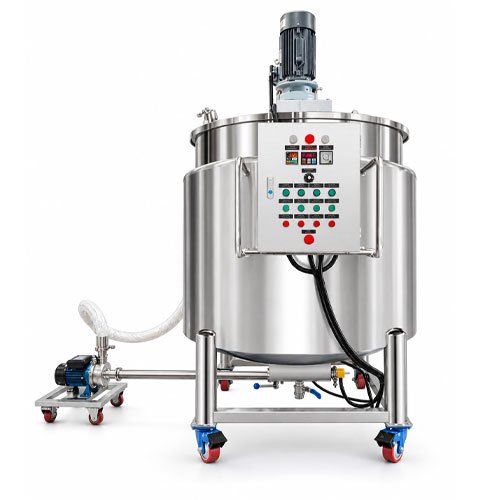
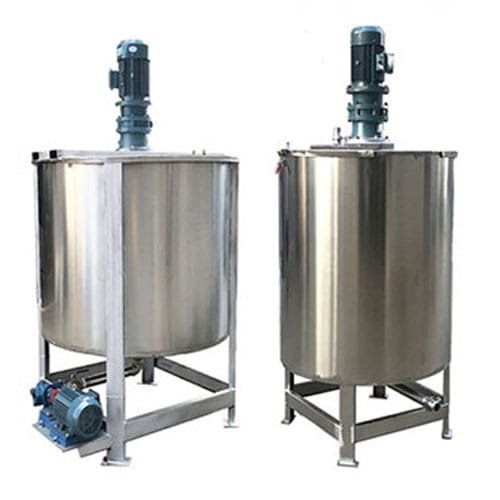
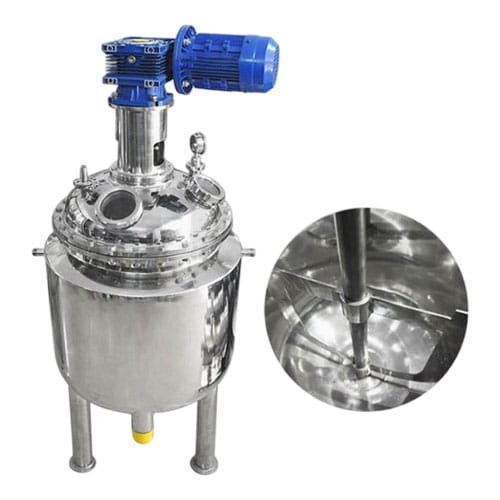
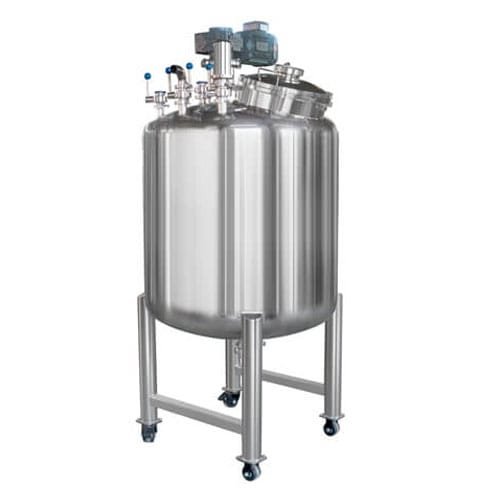
A liquid detergent mixing tank is a vessel designed to combine and blend different raw materials into a finished liquid cleaning product. It is generally equipped with a mechanical agitator and may include additional equipment such as a high-shear mixer, homogenizer, heating or cooling jacket, control panel, and product discharge system.
Depending on the formulation, the mixing system can be customized to handle low-viscosity liquids, thicker detergent solutions, and products that require better dispersion of additives or other ingredients.
The main components typically include:
- Mixing tank: A vessel that holds the raw materials during the blending process.
- Agitator: Circulates the product inside the tank to achieve uniform mixing and maintain consistency.
- High-shear mixer: Helps disperse difficult-to-blend ingredients and break down agglomerates when required.
- Heating and cooling jacket: Allows temperature control during processing for formulations that require heating or cooling.
- Control system: Enables operators to manage mixing speed, processing time, and other operating parameters.
The exact configuration depends on the product being manufactured and the required production process.
Key Features of a Liquid Detergent Mixing Tank
A liquid detergent mixing tank should be designed around the specific requirements of the formulation. While a conventional agitator may be sufficient for thin liquid detergents, thicker products or formulations containing ingredients that are difficult to disperse may require a different agitator design or an additional high-shear mixing system.
Stainless Steel Construction
Stainless steel is commonly used for liquid detergent manufacturing equipment because of its durability, corrosion resistance, and ease of cleaning. The appropriate stainless steel grade should be selected according to the chemicals used in the formulation, operating conditions, and cleaning procedures. The tank’s internal surface finish should also be considered to support effective cleaning and minimize product residue.
Variable-Speed Mixing System
Different ingredients require different mixing conditions. A variable-speed drive allows operators to adjust the agitator speed according to the formulation and processing stage. For example, a lower mixing speed may help control foaming during certain stages, while a higher speed may be useful when faster circulation or improved ingredient dispersion is required. The operating speed should always be selected according to the product’s characteristics and the mixing system’s design.
Heating and Cooling Arrangement
Some liquid detergent formulations require temperature control to help dissolve ingredients, maintain product properties, or achieve the desired consistency.A jacketed mixing tank can be used when heating or cooling is necessary. The heating or cooling arrangement should be selected based on the process temperature, batch size, and required heating or cooling time. Not every detergent formulation requires a jacket, so this feature can be included according to the actual production requirements.
Agitator Designed for the Application
The agitator is one of the most important parts of a liquid detergent mixing system. Its design affects product circulation, blending efficiency, and the ability to maintain a uniform mixture. Depending on the formulation, manufacturers may consider paddle, propeller, turbine, anchor, or other agitator configurations. The selection should take into account product viscosity, tank geometry, foaming tendency, and the desired mixing result. For products that require intensive dispersion, a separate high-shear mixer may be considered alongside the main agitator.
Applications of Liquid Detergent Mixing Tanks
Liquid detergent mixing tanks are used in a wide range of household, commercial, and industrial cleaning product manufacturing applications.
Laundry Detergent Manufacturing: Mixing tanks are used to blend surfactants, builders, fragrances, and other ingredients for liquid laundry detergents used in homes, laundries, and commercial facilities.
Dishwashing Liquid Production: These tanks help combine the ingredients used in dishwashing liquids, supporting consistent blending and the desired product characteristics.
Fabric Softener Manufacturing: Fabric softener production may require controlled mixing to achieve a uniform product. The mixing arrangement should be selected according to the formulation and its sensitivity to shear.
Liquid Hand Soap Production: Mixing tanks are suitable for manufacturing liquid hand soaps and related cleaning products. Proper agitation helps distribute ingredients evenly throughout the batch.
Industrial Cleaning Solutions: Industrial and commercial cleaning products often have different chemical compositions and viscosity levels. A customized mixing tank can be designed to suit the specific raw materials, operating conditions, and production requirements.
How to Choose the Right Liquid Detergent Mixing Tank
Selecting a suitable liquid detergent mixing tank involves more than determining the required tank capacity. Manufacturers should evaluate the complete process before finalizing the equipment specifications.
Batch Capacity
The tank should provide sufficient working volume for the required batch size, with appropriate allowance for headspace, foaming, and mixing requirements. The nominal tank capacity and usable working volume are not always the same.
Product Viscosity
The viscosity of the detergent influences the agitator type, motor power, shaft arrangement, and operating speed. Low-viscosity products may need a relatively simple mixing arrangement, while thicker formulations may require higher torque or specialized agitation.
Foaming Characteristics
Some detergent ingredients produce foam during mixing. The agitator design, mixing speed, and liquid level should be considered to minimize unwanted foaming and prevent overflow.
Temperature Requirements
If the formulation requires heating or cooling, the tank should be designed with a suitable temperature-control arrangement. This may include a jacket, temperature sensor, and associated heating or cooling equipment.
Production Capacity and Automation
The required production output determines the appropriate tank size and the level of automation. Depending on the project, the system may include automated ingredient addition, speed control, temperature monitoring, transfer pumps, and connections to storage or filling equipment.
Material Compatibility and Cleaning
The tank material, seals, gaskets, and other product-contact components should be compatible with the detergent formulation. Cleaning requirements should also be considered, particularly when manufacturing multiple products using the same equipment.
Customized Liquid Detergent Mixing Tanks for Industrial Production
Every detergent manufacturing process has its own requirements. A standard mixing tank may be suitable for straightforward formulations, while more complex products may benefit from a customized mixing system.
A customized liquid detergent mixing tank can be designed according to the required batch capacity, tank dimensions, material of construction, agitator type, motor power, mixing speed, and temperature-control requirements.
Depending on the production process, the system can also be integrated with raw-material loading arrangements, high-shear mixing equipment, transfer pumps, filtration units, storage tanks, and filling machines.
For manufacturers planning to expand production or introduce new detergent formulations, selecting the right combination of equipment can help improve process flexibility and support future capacity requirements.